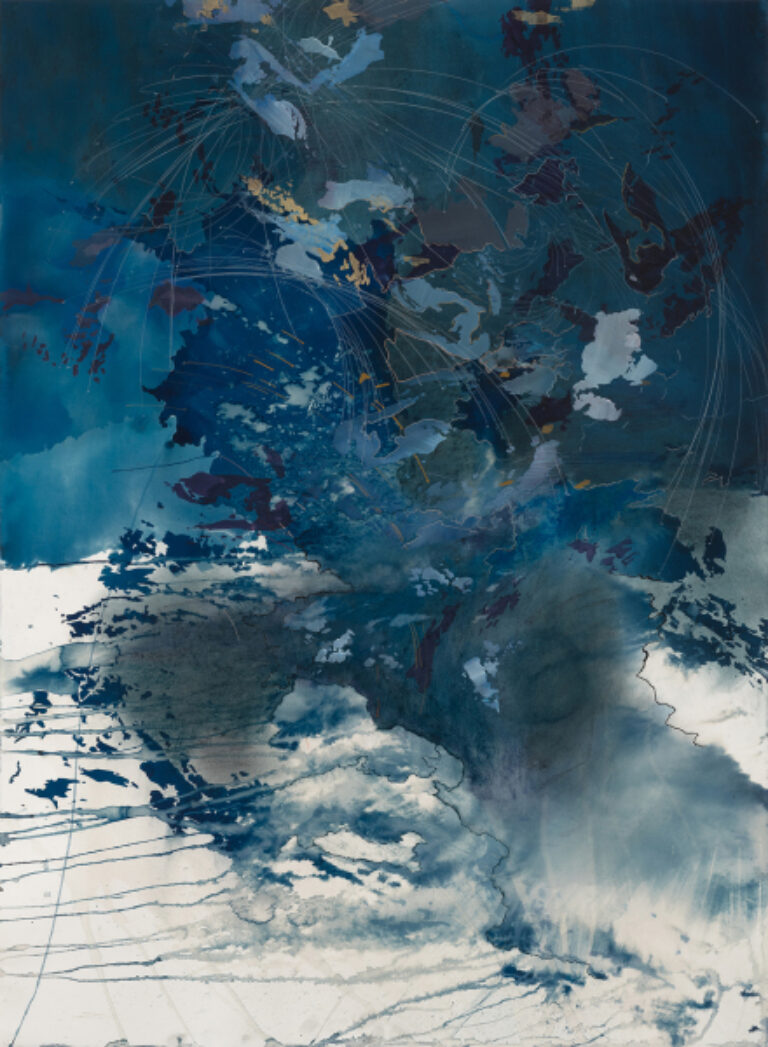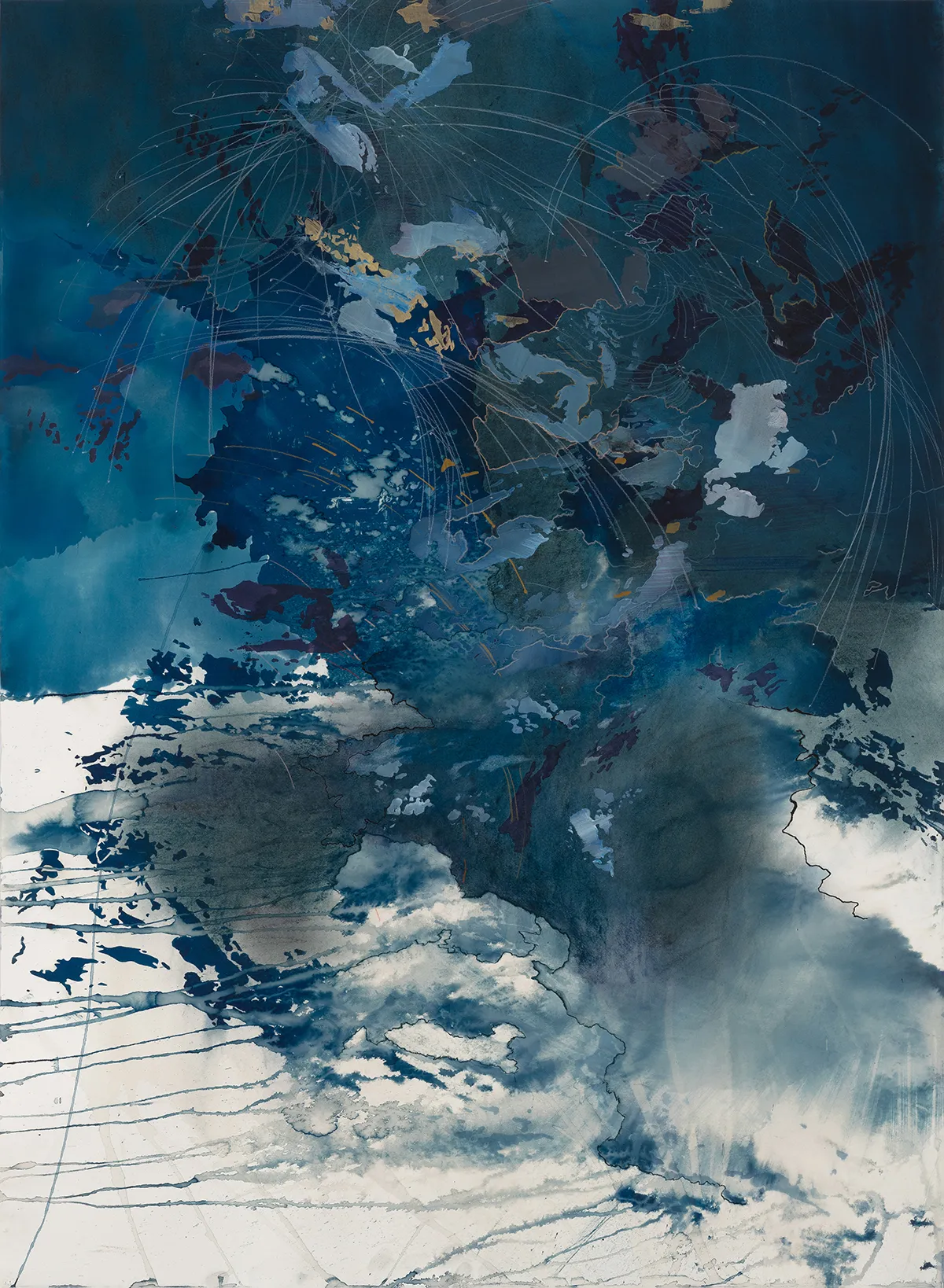

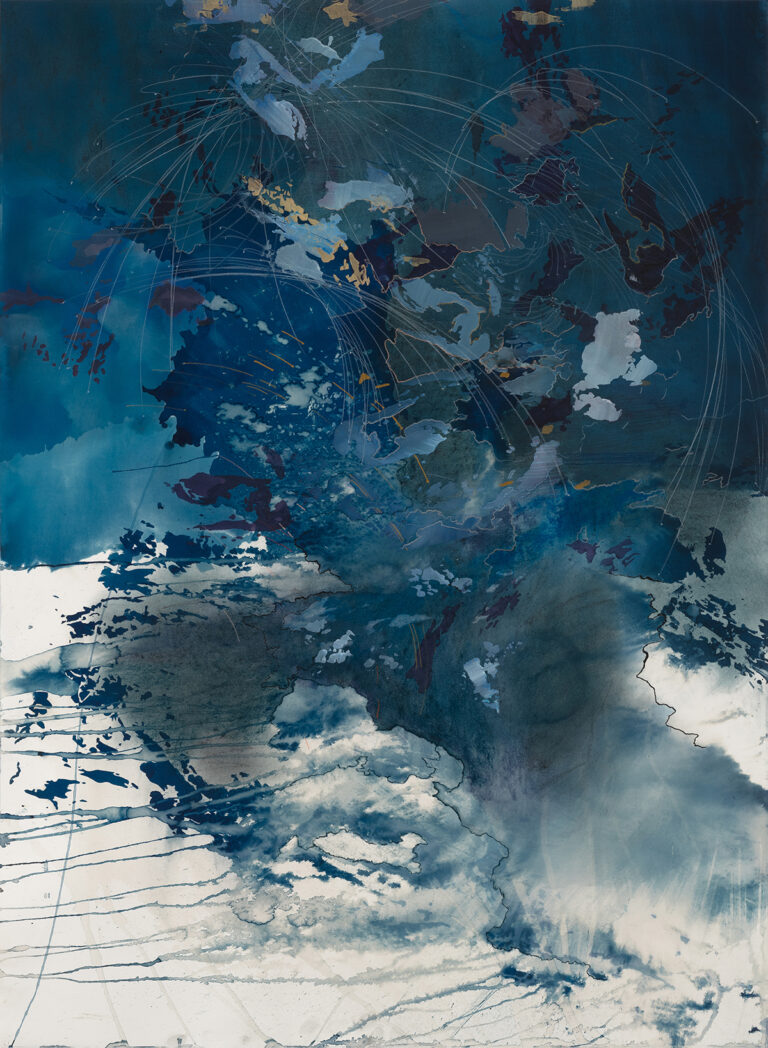
Artists use science in art to explore, explain, and express scientific ideas, often blending scientific knowledge with creative techniques to make thought-provoking works of art. Artist Jowita Wyszomirska (born 1980) combines drawing, experimental photographic processes, and NASA weather maps to contemplate global human impact on the planet.
The Light that Got Lost 1 is a mixed media artwork from Jowita’s Nearshore Light series of cyanotype drawings, which the artist describes as “made in collaboration with the landscape by employing sun, ocean water, sediment, and coastal plants.” Cyanotype printing is a process that produces a deep blue photographic image. To make a cyanotype, an artist places objects on paper treated with a specific chemical solution and exposes the treated paper to UV light.
To create this work, Jowita submerged light-sensitive cyanotype paper in the ocean, where salt, sand, and debris left organic marks. After exposure to sunlight, the marks on the paper emerged in varying shades of blue. The artist thinks of these elements of nature as collaborators in her work. Back in the studio, she applied additional cyanotype liquid over laser-cut stencils based on NASA weather maps, then added her own interpretation of weather data with trailing marks and clouds of acrylic paint, pastel, white charcoal, colored ink, and gold porous-tip pen.
The intricate process Jowita used to create The Light that Got Lost 1 suggests a cross-section of atmosphere, water, and earth—a forceful convergence that prompts us to consider the complex relationships between human action and environment.
While Earth’s climate has naturally changed throughout its history, the current warming trend is accelerating at an alarming rate. The burning of fossil fuels traps heat in the atmosphere, driving global warming. The effects of climate change include rising sea levels, more frequent and intense heatwaves and storms, melting glaciers, and disruptions to ecosystems and biodiversity.

Activities
- Classroom discussion: Invite students to consider the role art plays in communicating the complexities of climate change. What can art convey that scientific data or written reports might not? Have them share their thoughts with the class. Ask them to think about if art can make climate change more relatable and how it might inspire awareness, potentially leading to change or action.
- Ask students to research a specific renewable energy source (solar, wind, hydropower, etc.) and explain how it works and its benefits in combating climate change. Invite students to share their findings with their class.