
Unangax̂ (Aleut)
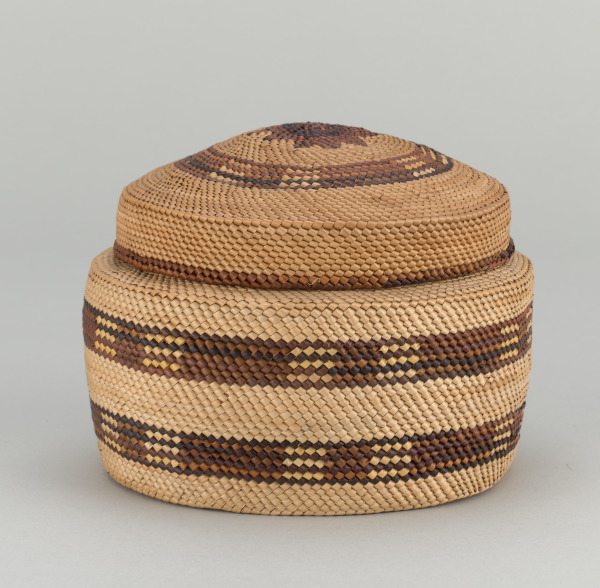
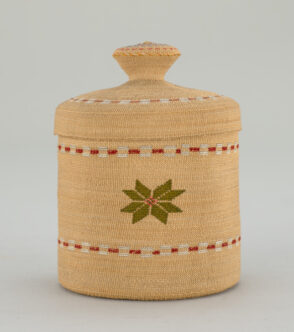
Basket with Lid
Unangan (Aleut), 1900-1932
Scroll

Unangax̂ (Aleut)
Basket with Lid
Unangan (Aleut), 1900-1932
Physical Qualities
Wild rye, silk floss, 4 3/4 x Diam. 3 11/16 in. (12 x 9.3 cm.)
Credit Line
Gift from the Estate of Mrs. Edward C. True
Object Number
1950.156
Indigenous artists have been weaving baskets and crafting boxes for millennia. The array of objects seen here come from disparate regions of North America, but they all have one trait in common: they were made from materials that shared their homeland with the Native artists who crafted them.
Artists utilized botanical knowledge passed down through generations to craft works like these. In North Carolina, Cherokee artist Emma Jackson Garrett collected rivercane and created natural dyes from bloodroot and walnut to make her baskets. To craft this box, an Algonquin artist in the Northeast carefully peeled bark from a paper birch so as to not harm the tree. The black material used to generate the squash-blossom design frequently found on Akimel O’odham baskets is derived from devil’s claw, a pronged seed pod that an artist must soak, carefully split, then bury in wet soil to maintain its pliability. An Unangax̂ artist transformed wild rye (beach) grass into a basket so finely and tightly woven that it looks like linen.
The Baltimore Museum of Art by gift, 1950; Estate of Mrs. Edward C. True
Dena S. Katzenberg, The Baltimore Museum of Art, "And Eagles Sweep Across the Sky: Indian Textiles of the North American West", September 18-November 13, 1977, cat no. 1, p. 81.


 On View at the BMA