





Physical Qualities
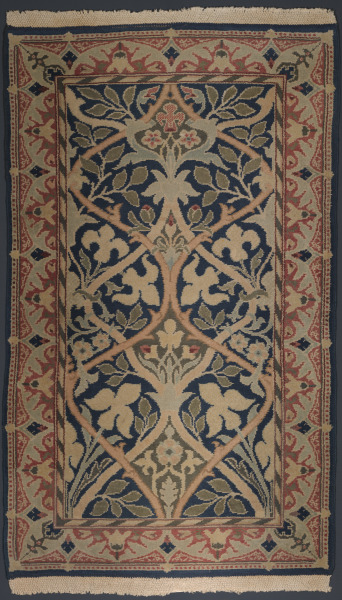
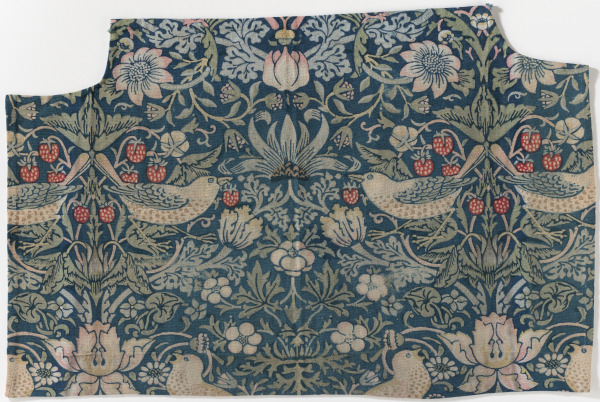
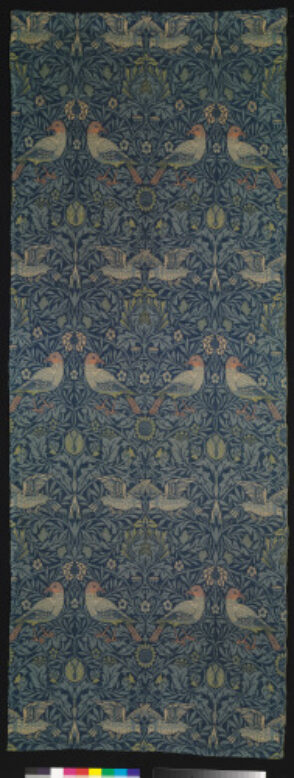
Wool, 93 1/4 x 34 1/8 in. (236.8 x 86.6 cm.)
Credit Line
Gift of Dena S. Katzenberg, Baltimore, MD.
Object Number
1995.240
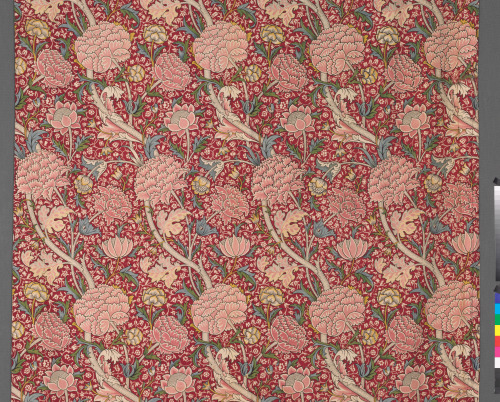
Bird was the first of a group of Morris designs depicting pairs of confronting birds. Morris wrote to Wardle in March 1877 telling him that he was studying birds and wanted to put them into his designs. The pattern for this textile, however, was inspired not just by nature, but also by the sixteenth- and seventeenth-century Italian silks from Lucca and Sicily that Morris studied at the South Kensington Museum (now the Victoria and Albert Museum). Morris described these fabrics as having "the perfect balance between the wild fantasy and luxurious intricacy of the East" and "the straight-forward story-telling imagination...of medieval Europe." Bird was used in the first floor drawing room of Morris' residence Kelmscott House. His daughter May described the pattern as "intimate and friendly." According to May Morris, "It suggests not the wealth of the millionaire, but the modest competence of a middle-class merchant who lives…with the few beautiful things he has collected slowly and carefully."
Baltimore Museum of Art by gift, 1995; Dena Katzenberg, Baltimore, MD.
Anita Jones, "William Morris: The Reactionary Revolutionary," BMA, April 9, 2003 - October 5, 2003, no catalogue.
Andre, Linda, and Routhier, Jessica Skwire. Eds. The Baltimore Museum of Art: Celebrating A Museum. Baltimore, Maryland: Baltimore Museum of Art, 2014. pg.56
Inscribed: Sewn on the reverse at the upper left is a small fabric tag with the woven or machine embroidered letter/numbers 'P286' in black.


Manufacturer
Morris & Company
1874–1939
1875-1940; working at Merton Abbey, 1881-1940
Meet Morris & Company