







Unidentified
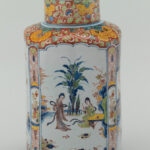
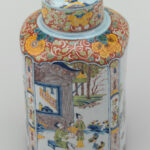
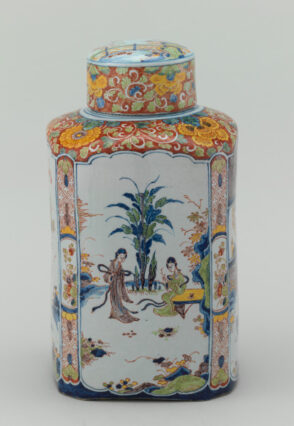
Covered Tea Canister
1724
Physical Qualities
Tin-glazed earthenware, 9 7/8 x 5 7/8 in. (25.1 x 14.9 cm.)
Credit Line
Gift of Mrs. Francis White, from the Collection of Mrs. Miles White, Jr.
Object Number
1973.76.206.2
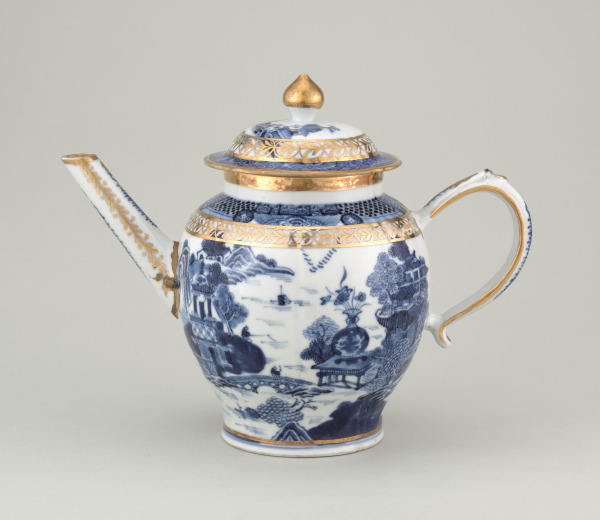
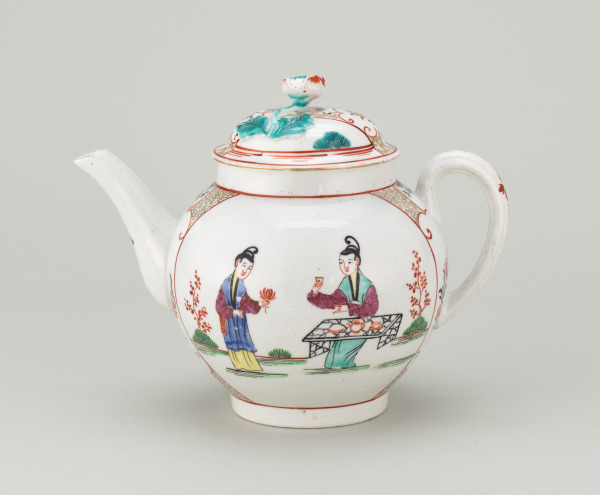
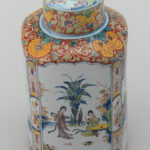
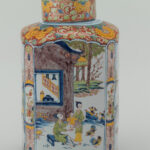
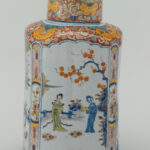
These containers for black and green tea leaves imitate Chinese porcelain. Until the early 1700s, the recipe for lightweight, white porcelain clay was only known to artists in China, Korea, and Japan. To create a rival product, Dutch ceramicists applied coats of white-firing glaze over local, heavier gray clays. On these canisters, the robed figures, open-air architecture, and leafy landscape were likely copied directly from an imported piece of Chinese porcelain. The border of vines, florals, and flourishes, however, are derived from European pattern and ornament. This hybrid design frames Asian imagery within a European visual language, just as the Asian-imported tea was housed in Dutch vessels.
Maker
Unidentified
2000-01-01 00:00:00–2000-01-01 00:00:00