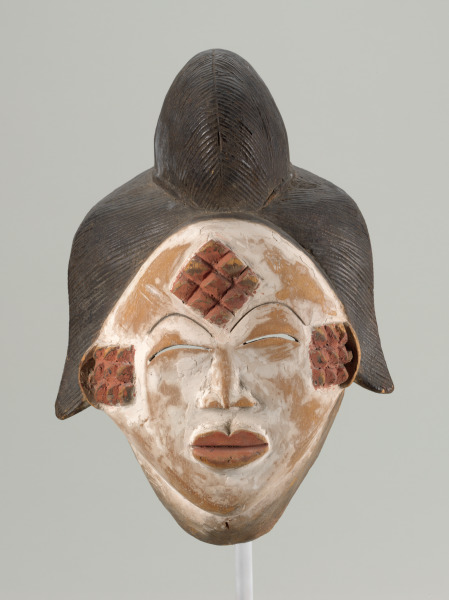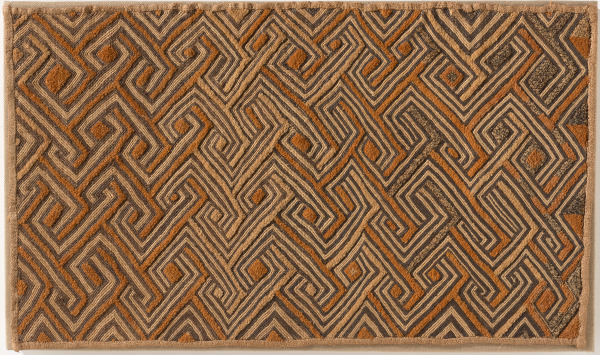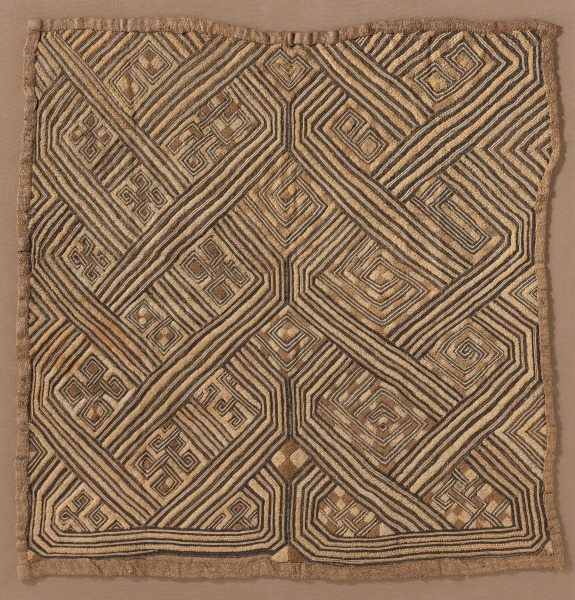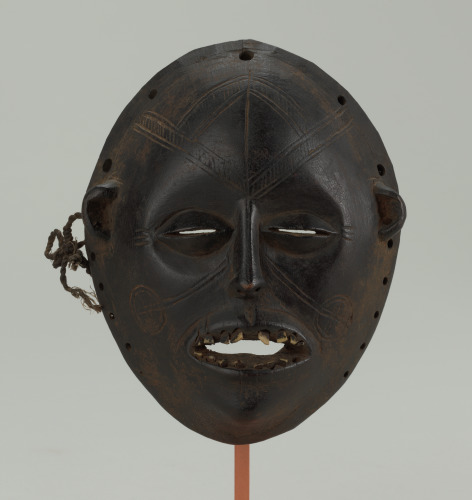






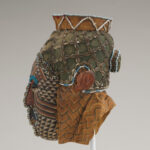
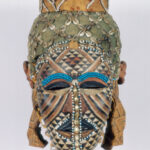
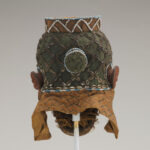

Physical Qualities
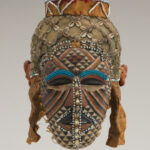
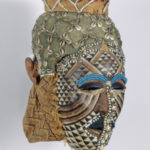
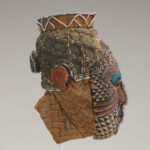
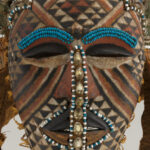
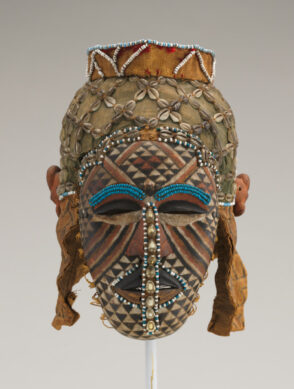
Wood, cloth, copper alloy tacks, plant fibers, cowrie shells, glass beads, paint, 13 1/2 x 9 1/16 x 11 13/16 in. (34.3 x 23 x 30 cm.)
Credit Line
Gift of Alan Wurtzburger
Object Number
1954.145.77
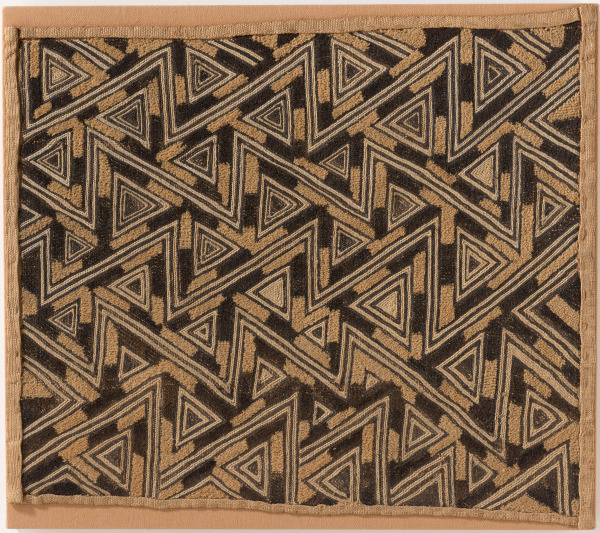
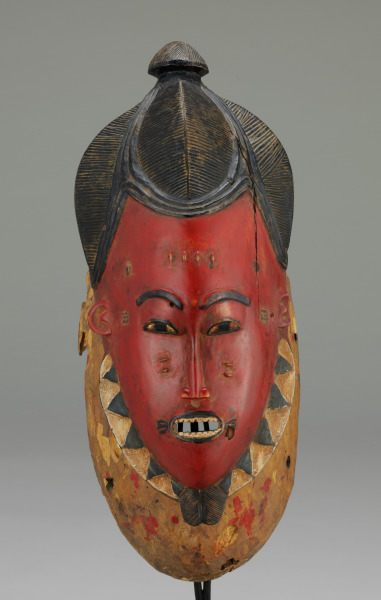
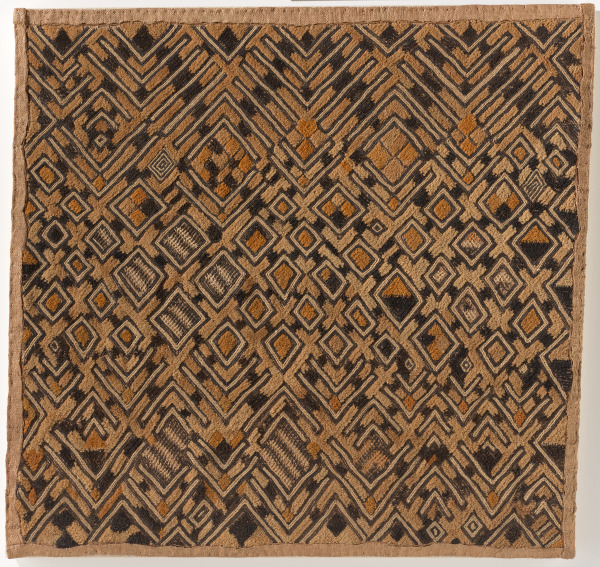
Many of the materials on these four masks demonstrate the wide-ranging cultural exchange that occurred globally and across the African continent. Cowrie shells are closely associated with the royal court of the Kuba Kingdom. Harvested from warmer salt waters of the Indian Ocean, cowrie shells had to be transported great distances to the land-locked Kasai region of the Democratic Republic of the Congo. Similarly, glass beads like the ones featured on the Mikenga, Ngaady Mwaash, and Bwoom masks often originated from European sources and circulated widely across Africa, further emphasizing the interconnectedness of trade routes throughout the continent.
"Meditations on African Art: PATTERN," Mar 12, 2008-Aug 17, 2008, BMA, Karen Milbourne.
African Reinstallation, "Public Art," April 2015, Wurtzburger Galleries, BMA, Kathryn Gunsch.
African Reinstallation, "Public Art," April 2015, Wurtzburger Galleries, BMA, Kathryn Gunsch.
Lamp, Frederick John. "See the Music Hear the Dance: Rethinking African Art at the Baltimore Museum of Art." New York: Prestel, 2003, p.172, ill.
BMA Today, Spring 2008, ill. p. 9.
Gatto, Joseph A., Albert W. Porter and Jack Selleck. "Exploring Visual Design: The Elents and Principles." 4th Edition. Davis Publications, Inc: Worcester, PA, 2011, p. 169, fig. 9-4.
"In a New Light: News of the Campaign for the Baltimore Museum of Art." December 2010. p. 5 and detail on p.1.
Baltimore Museum of Art. "The Baltimore Museum of Art: Celebrating a Museum." Baltimore: The Baltimore Museum of Art, 2014.
Milbourne, Karen. Meditations on African Art: Pattern. Exhibition brochure, March 12 – August 17, 2008. Baltimore, MD: Baltimore Museum of Art, cover.


 On View at the BMA