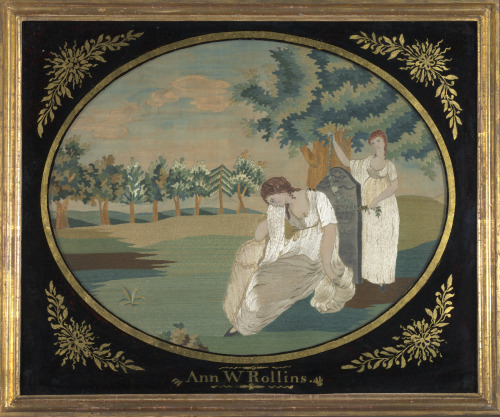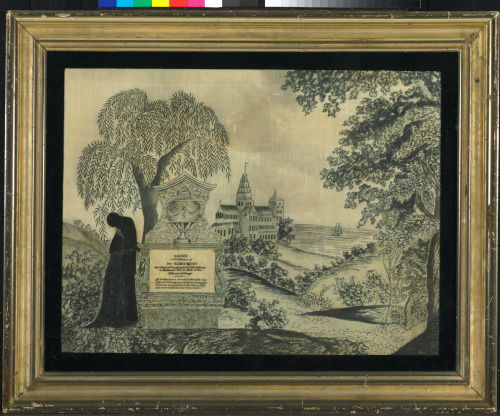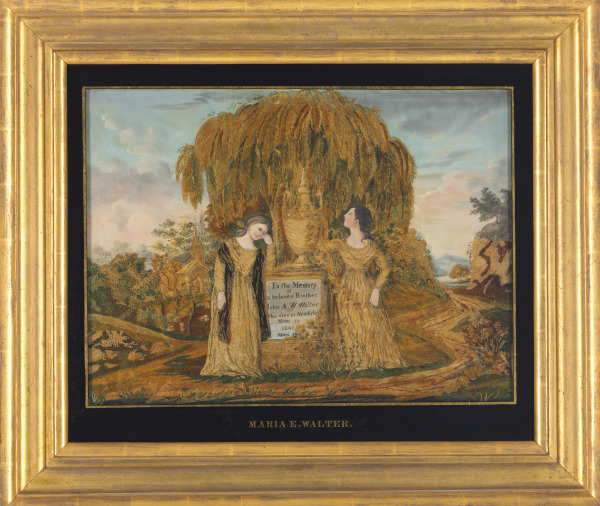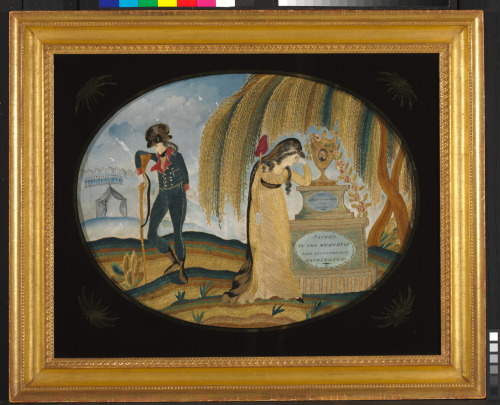







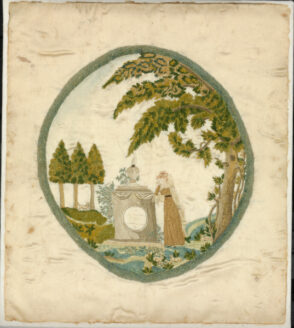
Mourning Embroidery Dedicated to Departed Friends
1799-1819
Physical Qualities
Silk ground, silk and silk chenille embroidery threads, watercolor, ink, Image: 11 7/8 x 10 3/4 in. (30.2 x 27.3 cm.); Framed: 19 3/4 x 17 13/16 x 2 in. (50.2 x 45.2 x 5.1 cm.)
Credit Line
Bequest of Margaretta Camilla Whiting, Baltimore, MD.
Object Number
1994.469
Possibly at Sarah Pierce’s Litchfield Female Academy; Misses Patten’s School, Hartford, Connecticut; or the Moravian School for Girls at Lititz, Pennsylvania.
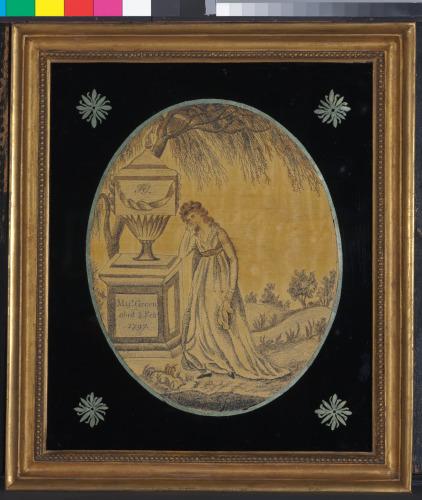
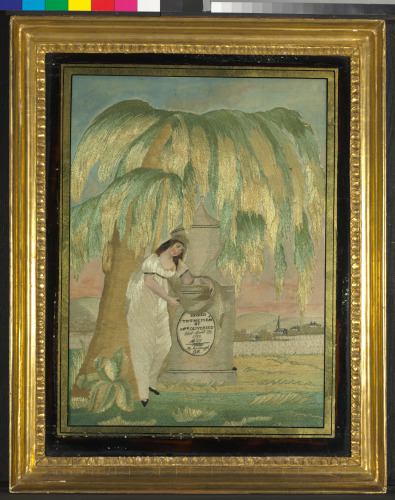
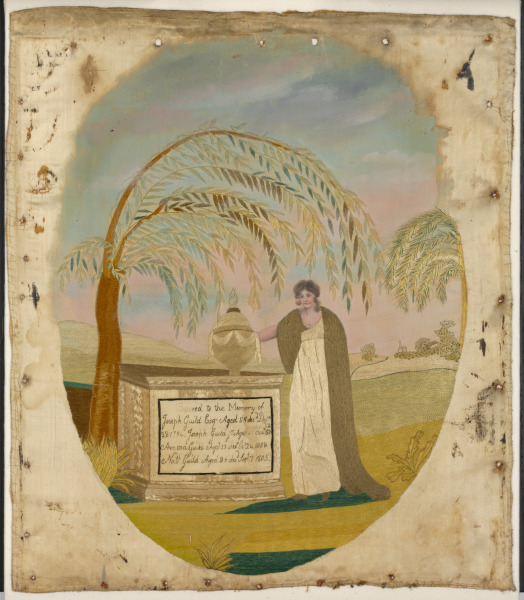
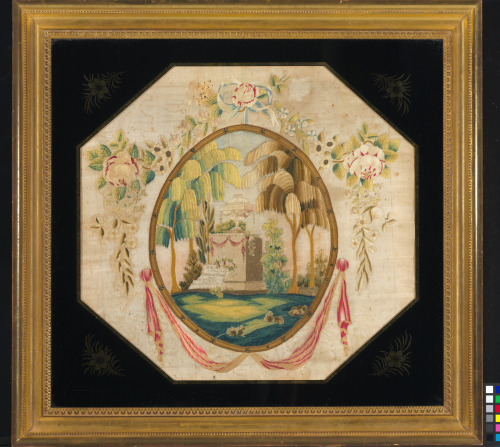
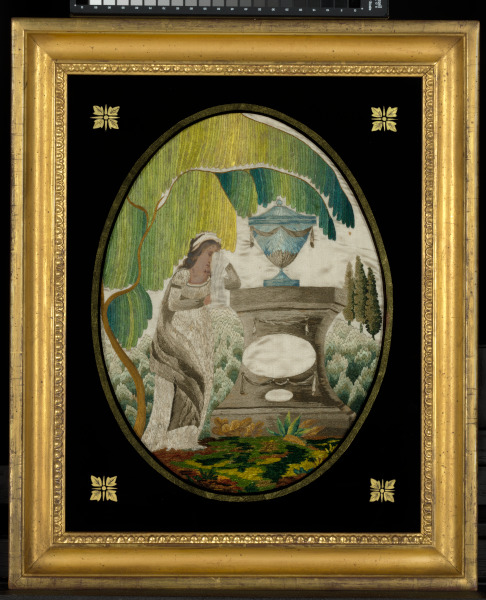
In the late 18th century, English girls worked silk-embroidered memorials honoring historical figures such as Shakespeare and British naval hero Lord Nelson. With the death of George Washington in 1799, American girls followed suit, stitching tributes to their nation’s first hero. Soon, however, they widened their scope to honor family members and friends, including those whose death was far removed in time. Thus, mourning embroideries served not only as true expressions of grief, but also as fashionable family records or household decorations. This example depicts a woman standing before a monument dedicated simply, To the memory of departed friends.
Baltimore Museum of Art by Bequest, 1994; Margaretta Camilla Whiting, Baltimore, MD.
Anita Jones, The Baltimore Museum of Art, "Lessons Learned: American Schoolgirl Embroideries," November 23, 2014-May 10, 2015.
Inscribed: Obverse: Written in hand in ink on monument: 'To/the memory/of/departed friends'; Reverse: Written in hand in ink on backing paper: 'mourning piece/(In circle: 'To the memory of departed friends'/embroidery on satin'; Written in ink on red and white paper label on reverse at bottom: 'M. C. Whiting'