





Kongo
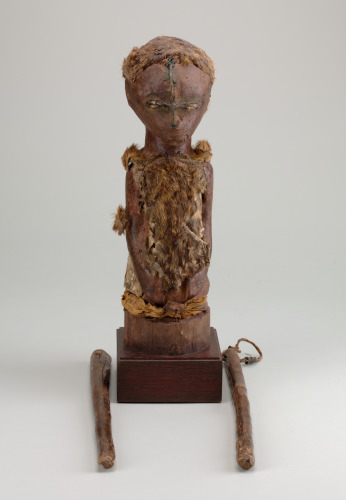
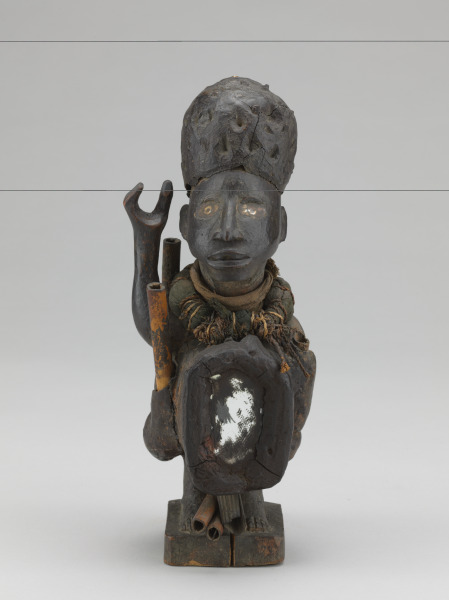
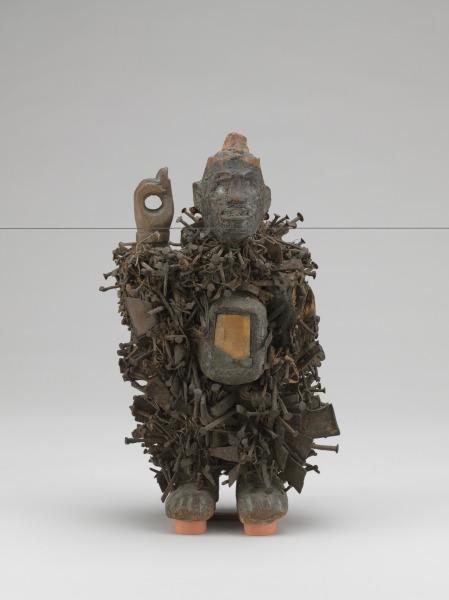
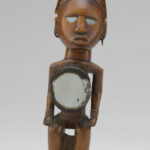
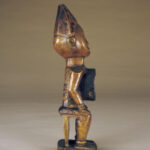
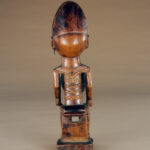
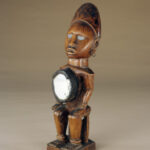
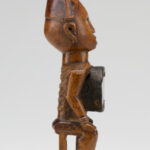
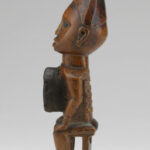
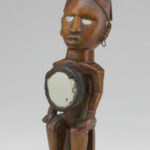
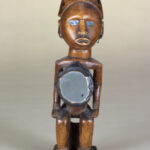
Power Figure (Nkisi)
Kongo, 1900-1932
Scroll

Kongo
Power Figure (Nkisi)
Kongo, 1900-1932
Physical Qualities
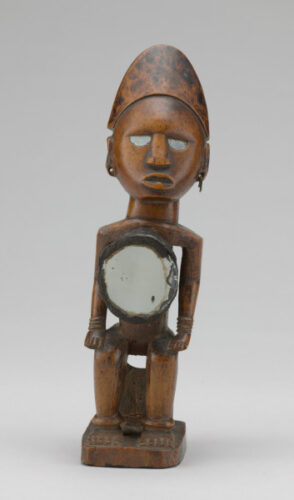
Wood, mirrored glass, copper alloy, encrustation, 10 13/16 x 2 3/8 x 2 3/4 in. (27.5 x 6 x 7 cm.)
Credit Line
Gift of Alan Wurtzburger
Object Number
1954.145.65
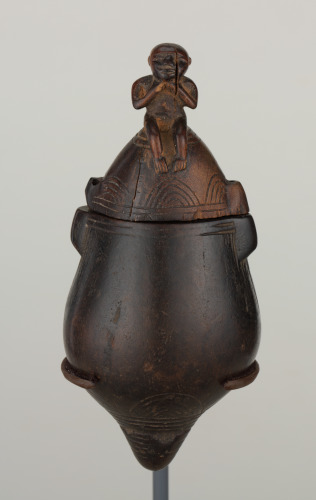
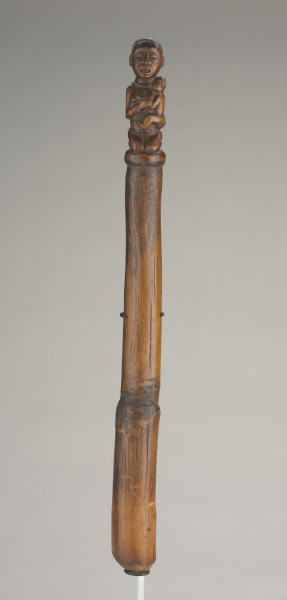
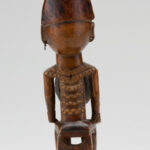
The wide eyes of these sculptures suggest a living presence within. In the Kingdom of Kongo, men and women sought healing and protection from diviners who worked with powerful objects called minkisi (singular: nkisi). These works took many shapes - from cloth bundles to clay pots to human and animal figures - but all channeled the power of spiritual forces that were invited to live inside the container that had been made for them. During the era of the transatlantic slave trade - which saw as many as 3 million Kongolese citizens kidnapped and enslaved between 1500 and 1900 - more and more minkisi began to take human form. These works come from the 19th century, or soon after. Their human form and pose reflect the anxieties of this traumatic time in African history.
"Meditations on African Art: Light," Dec 17, 2006 - Apr 1, 2007, BMA, Karen Milbourne.
Gallery Rotation, "Wurtzburger Case 1," January 2008 - present.
African Reinstallation, "Sacred Art," Apr 2015, Wurtzburger Galleries, Kathryn Gunsch.
Gallery Rotation, "Wurtzburger Case 1," January 2008 - present.
African Reinstallation, "Sacred Art," Apr 2015, Wurtzburger Galleries, Kathryn Gunsch.
Frederick John Lamp, "See the Music Hear the Dance: Rethinking African Art at the Baltimore Museum of Art." New York: Prestel, 2003, p.259, ill.
The Baltimore Museum of Art, "BMA Today," Summer 2008, ill. p. 9.
Baltimore Museum of Art. "The Baltimore Museum of Art: Celebrating a Museum." Baltimore: The Baltimore Museum of Art, 2014.


 On View at the BMA