





Physical Qualities
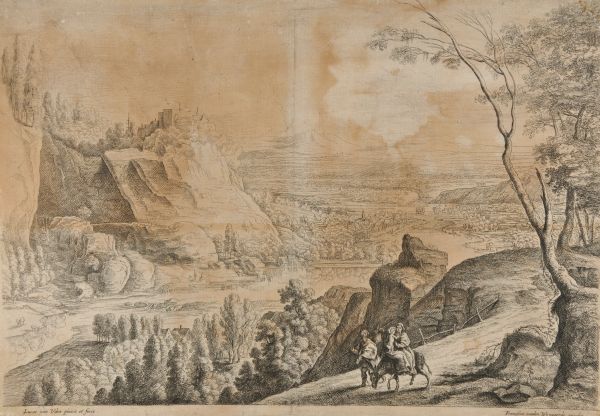
Etching, drypoint, and engraving, Sheet: 215 x 286 mm. (8 7/16 x 11 1/4 in.)
Plate: 213 x 284 mm. (8 3/8 x 11 3/16 in.)
Credit Line
Garrett Collection
Object Number
1946.112.7810
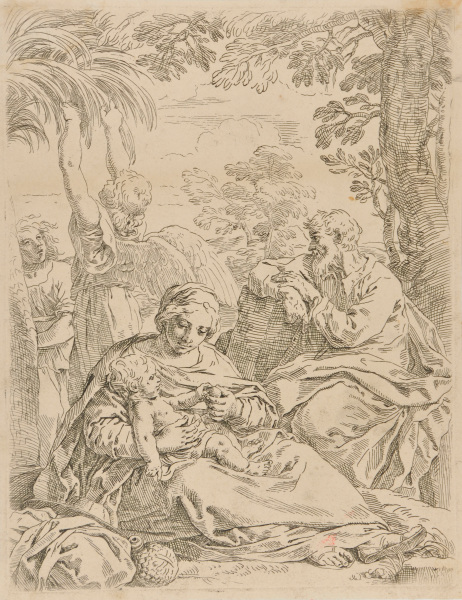
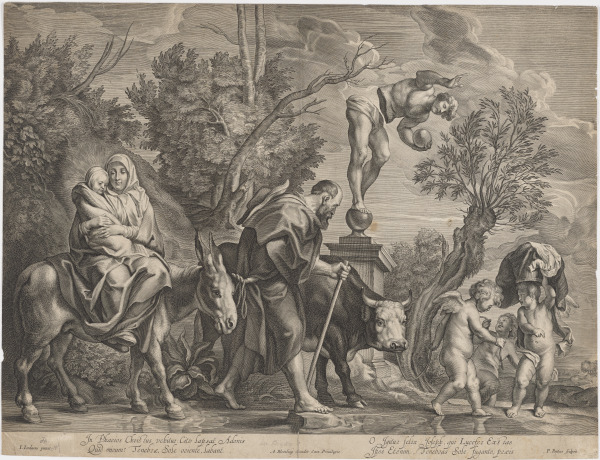
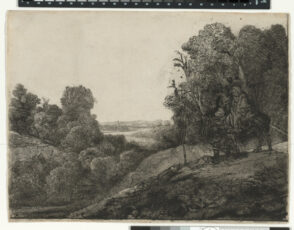
Printmakers’ plates frequently had second lives after their makers died. Such plates were often purchased by print publishers who reworked and reprinted them for financial gain. The case of the copper plate for Rembrandt’s The Flight into Egypt, however, is quite unusual. This plate began life as Tobias and the Angel, an etching created by Hercules Segers in the 1620s. Rembrandt, who greatly admired the older artist’s work, acquired the plate and proceeded to rework the composition to make it his own. He scraped out the two large figures dominating the landscape at right and replaced them with an intimate group of Mary and the Christ Child riding on a donkey, accompanied by Joseph. Close inspection reveals traces of the angel’s wing in the tree at right.
T. Harrison Garrett, Baltimore, purchased 1885 (Lugt supp. 2435b); James L. Claghorn, Philadelphia (Lugt supp. 555c).
BMA, Jacobs wing rotation, 8 February - 25 May 2011.
"Rembrandt's Etchings of the Bible," North Carolina Museum of Art, October 13, 2002- February 23, 2003.
BMA, "The Age of Rembrandt: Distinguished Prints from the Collection," 12 February - 13 April 1997.
Jay Fisher, BMA, "Rembrandt: The Museum's Collection," 15 January - 21 April, 1991.
"Rembrandt's Etchings of the Bible," North Carolina Museum of Art, October 13, 2002- February 23, 2003.
BMA, "The Age of Rembrandt: Distinguished Prints from the Collection," 12 February - 13 April 1997.
Jay Fisher, BMA, "Rembrandt: The Museum's Collection," 15 January - 21 April, 1991.
Signed: 1
Inscribed: Recto: none
Markings: CM: Karl Eduard van Liphart (Lugt 1687); unidentified "E." (Lugt 823); Claghorn


Explore the Collection Further