




Elizabeth Olds and WPA/Federal Art Project, New York City
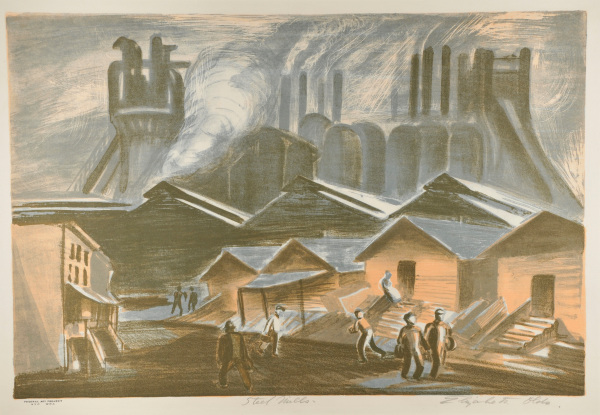
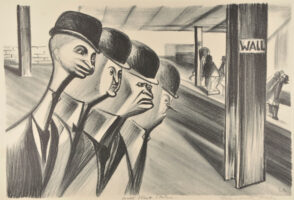
Wall Street Station
1937
Scroll

Physical Qualities
Crayon lithograph with scraping, Sheet: 291 x 404 mm. (11 7/16 x 15 7/8 in.)
Image: 258 x 381 mm. (10 3/16 x 15 in.)
Credit Line
The United States General Services Administration, formerly Federal Works Agency, Works Progress Administration, on extended loan to the Baltimore Museum of Art.
Object Number
L.1943.9.81
Stockbrokers rush to work on Wall Street in one print while unhoused men dig through trash in the other. The wealth gap between rich and poor contributed to
the financial collapse of 1929 and was especially visible in densely populated cities. WPA artists often used satire to call out this inequity.
In Wall Street Station, Elizabeth Olds mocked the generic appearance of powerful men by using repeated forms and facial distortions. Conversely, Mabel Dwight used the contrast between her title, Buried Treasure, and her subjects to highlight human consequences of the financial crisis. The wealth gap, which shrank as a result of the New Deal’s social and economic programs, has widened in recent years as subsequent administrations have attacked and dismantled those programs.
Virginia Anderson and Robin Owen Joyce, The Baltimore Museum of Art, "Art/Work: Women Printmakers of the WPA," November 5, 2023 - June 30, 2024.
Inscribed: RECTO: LL margin (stamped in black ink): 'FEDERAL ART PROJECT / NYC WPA'; LC margin (pencil): 'Wall Street Station.'; LR margin (pencil): 'Elizabeth Olds.'; BR Corner (pencil): '23'; BR Corner on stone: 'E.O.'. VERSO: LR (pencil): '#1696 - gr. I'; UC: BMA stamp.


Publisher
WPA/Federal Art Project, New York City
2000–2000
Meet WPA/Federal Art Project, New York City