
A Tulip, a Carnation and Roses, with Shells and Insects, on a Ledge
0:00
/
2:07
Balthasar van der Ast
Date:
c. 1630s
Medium:
Oil on wood panel
Size:
Width: 15 7/8″
Height: 12″
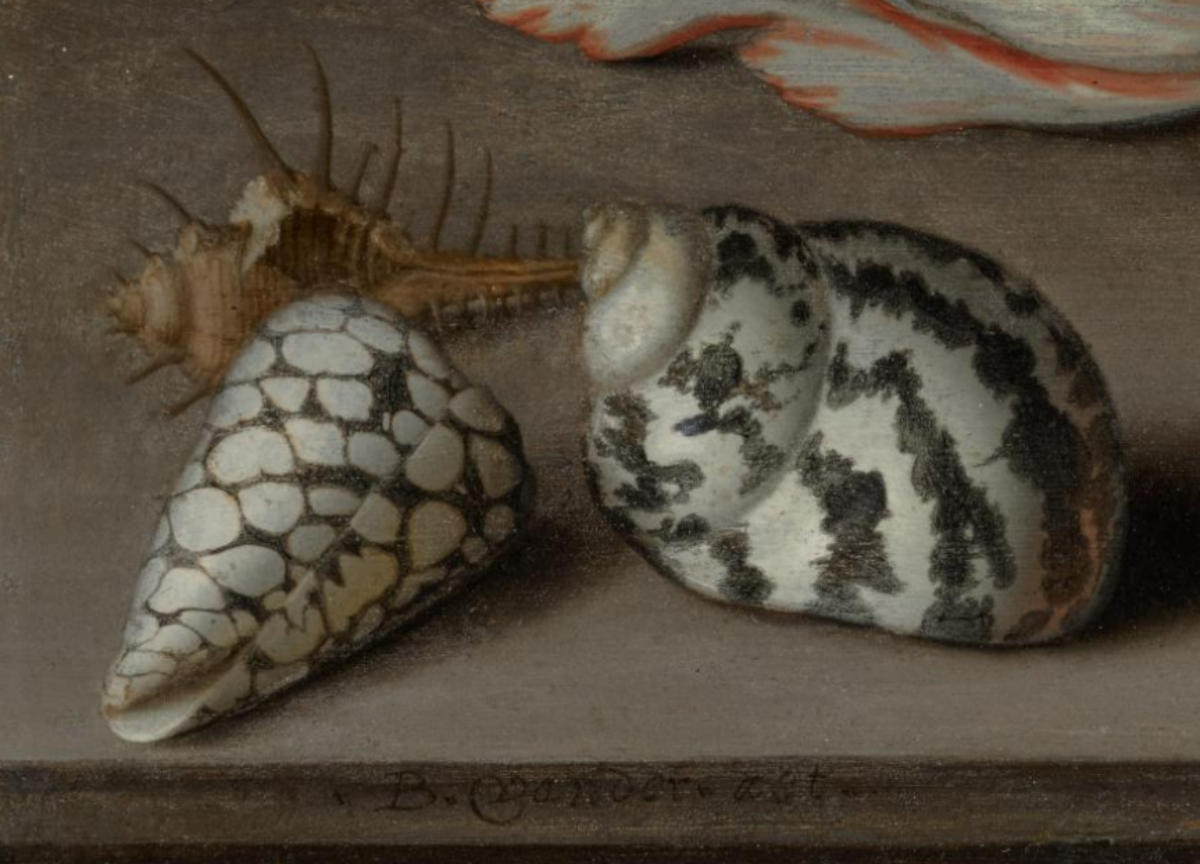
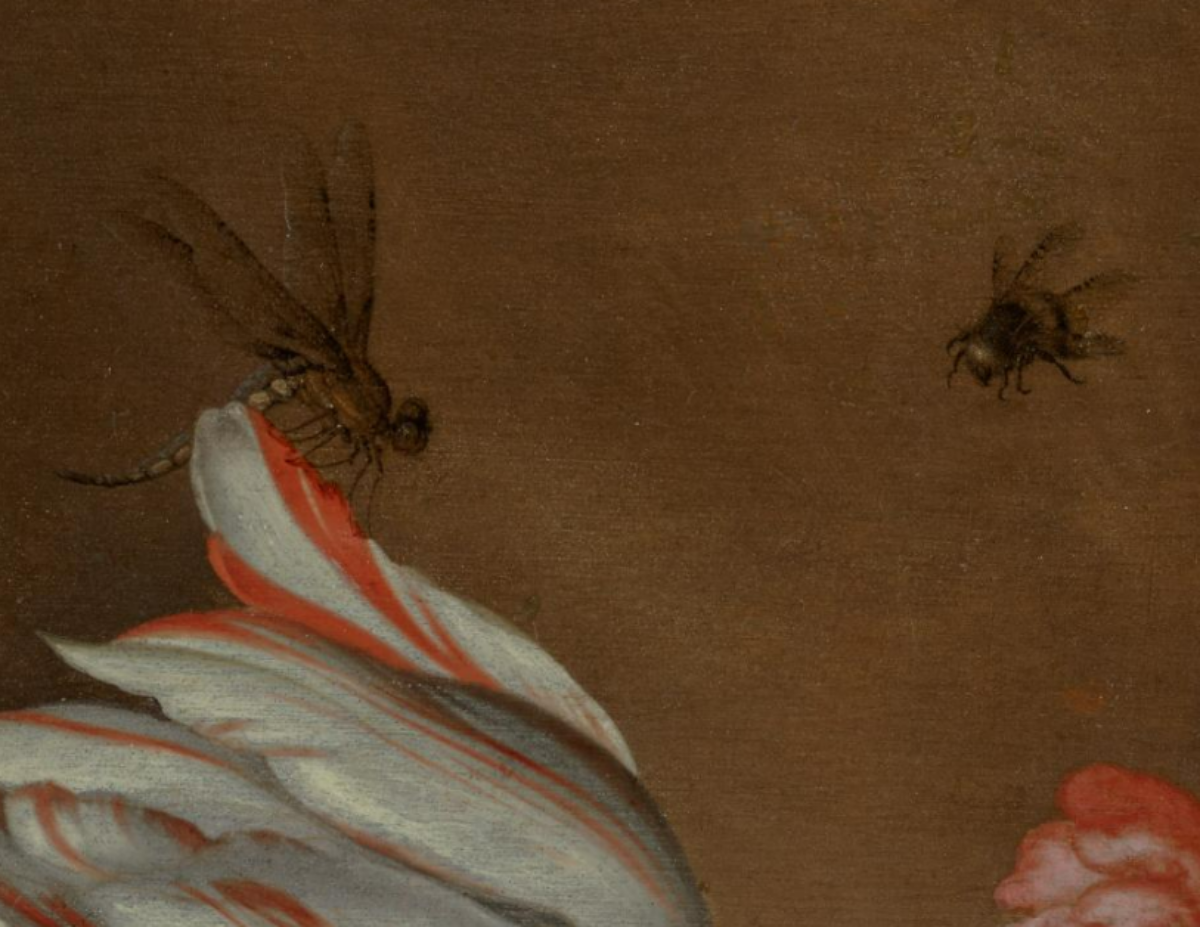
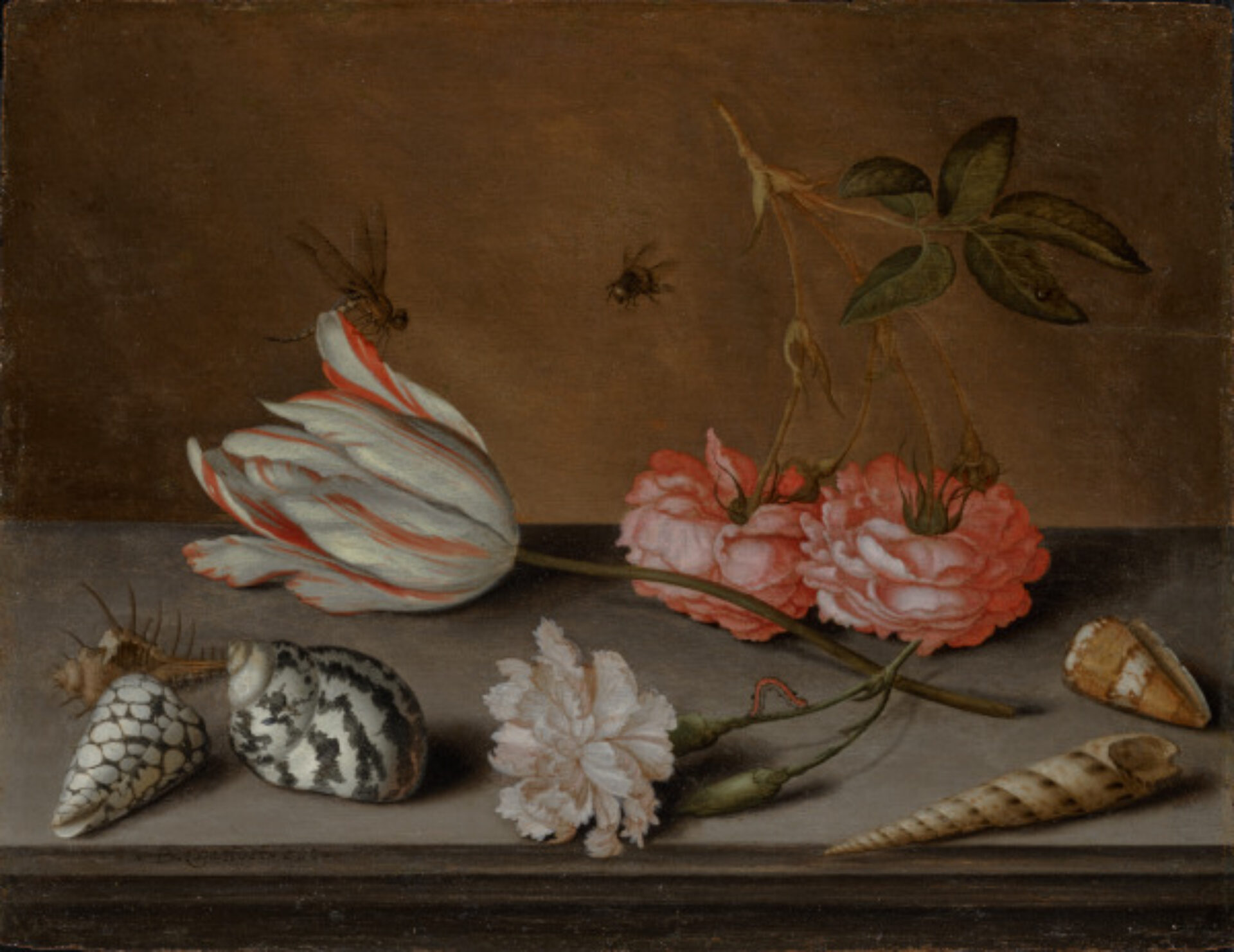
Seashells from the Indian Ocean, the Pacific Ocean, and the Caribbean Sea line the foreground. A rare red-and-white-striped tulip, originally from Central Asia, lies toward the back of the stone tabletop. A dragonfly, bumblebee, and inchworm quietly enliven the scene.
Balthasar van der Ast was among the first generation of Dutch artists to make still-life painting a specialized genre in the 17th century. Born in Middelburg, in the Netherlands, he would have been familiar with the activities of the Dutch East India Company, which transported commodities and enslaved people throughout Asia and Africa. Some of the shells depicted here would have moved through these global networks. Middelburg also had a robust intellectual community interested in botany. Varieties of flora, fauna, and other natural specimens appealed to members of the Dutch elite, who collected and displayed similar rarities.
Additional Audio
Seashells and Colonial Exploitation
Transcript
[Lara Yeager-Crasselt] The seashells represented here, on the left we have a marble cone shell, which comes from the Indo-Pacific Oceans. We have a West Indian top shell further over to the right. Behind them, a murex. And then further over, an auger shell and then also a general cone shell. So, these objects or these seashells come from East and West, and they would have all been brought back centrally to the Netherlands. The labor involved in procuring and finding these shells was often a very dangerous, time-consuming, difficult activity. And it was typically performed in places like the islands of Indonesia by the Indigenous people who lived there and who became involved, in some cases were enslaved by the Dutch, and had to both find, dive for these shells, clean them, prepare them for export back to the Netherlands. And this was often a history which for a long time had been hidden. The enormous amount of seashells that poured into the Netherlands through the ships, from the Dutch East and West India companies, just opened up the market. Seashells, like flowers, were seen as God’s creation in the period that Van der Ast was working. There was a long tradition of collecting seashells that goes back to classical antiquity. And so, collectors were eager to own different varieties of shells to keep them in what we call collector’s cabinets, to study them, discuss them, compare them. And of course, they became of great interests for artists, like Balthasar van der Ast, who may have had his own collection of seashells. What we do know is that in preparation for many of these paintings, he did drawings from life studying these shells in these beautiful pen-and-ink drawings on parchment, which are very delicately rendered. And he probably would use these study drawings and then incorporate different shells into his finished paintings.
Adding this Painting to the Collection
Transcript
[jazz music softly playing]
[Lara Yeager-Crasselt] The BMA acquired this painting in the spring of 2023, and it is a very exciting and important addition to the collection of European art. We have only two other Dutch still lifes from this period, from much later in the 17th century, and they also represent different kind of subject matter and a different focus. Balthasar van der Ast was one of the founding and most important Dutch still-life painters working in this period, so having his work is really a foundational representation of painting in Northern Europe from this early modern period. The painting also allows us to bring together not only the artistic interests of the
period but very much so studies of botany, of natural history, collecting histories, and finally those of colonial exploits around the globe of trade, and gives us that ability to situate works, which were created so many hundreds of years ago, into a kind of discussion that is also relevant and accessible to us today. We all, in some way, may identify with collecting seashells. It’s a pastime or activity that may be something that you’ve done when you visited the beach or traveled far and brought seashells home with you. So that tradition is something that has gone on for hundreds and hundreds of years, and here we see the representation of that. Adding this painting to the European collection allows us to tell new stories and get perspectives on this rich and complicated period of European history and culture that we may not have had a chance to explore before.