






Iñupiaq
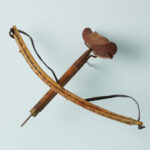
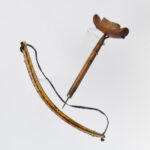
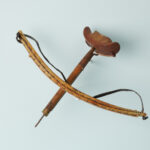
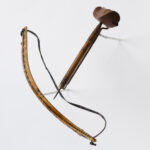
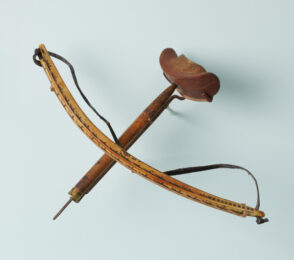
Bow Drill Set
Inuit, 1867-1899
Physical Qualities
Wood, walrus ivory, hide, copper alloy, iron, a: (bow) 32 cm. h; b: (chin piece) 9 cm. h; c: (drill) 21 cm. h
Credit Line
John Erikson Collection
Object Number
1955.167.4a-c
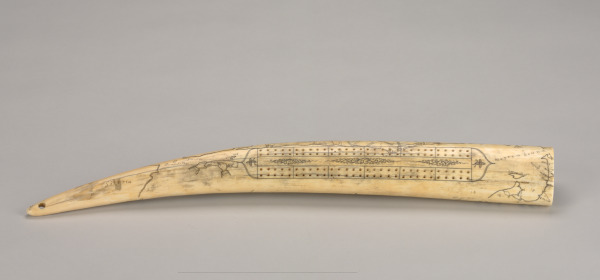
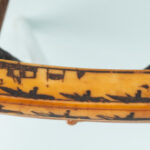
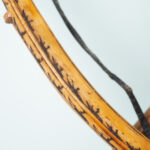
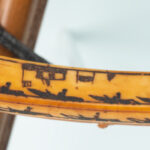
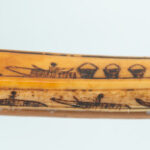
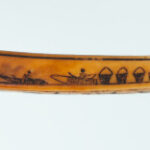
This bow drill depicting a kayak expedition was an essential tool for lighting fires and carving. Carving was often a group activity tied to storytelling; while carving, male Elders taught younger men about topics like animals, weather, and hunting techniques. To operate the bow drill, the carver wrapped the hide cord around the wooden shaft and positioned the drill bit on the object being carved. The other end rested in a mouthpiece gripped between the carver’s teeth. When the bow moved side to side, the shaft rotated to create the carvings.
Purchased by John Erikson in Alaska ca. 1900
Darienne Turner, The Baltimore Museum of Art, “Arctic Artistry”, July 17, 2022-January 8, 2023.
BMA, Vitrines, May Wing, Summer 1957.
BMA, Vitrines, May Wing, Summer 1957.
Inscribed: a) white label with red border, black ink: '18'; c) white label with red border, red ink, BMA receipt number: '3245-10-c'