







Meissen Porcelain Factory
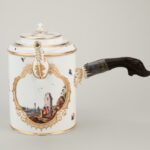
Chocolate Pot and Cover
1744
Physical Qualities
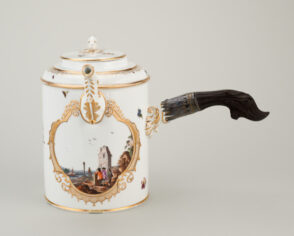
Hard-paste porcelain, wood, metal, enamel and gilt decoration, 7-1/4 x 10-1/4 x 4-13/16 in. (overall diam.)
Credit Line
Mr. and Mrs. Kenneth S. Battye Fund
Object Number
1978.20
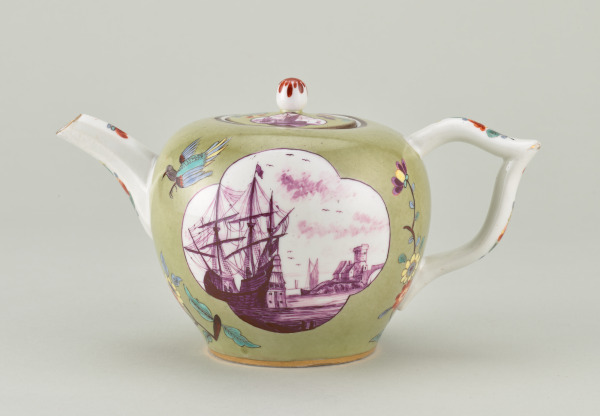
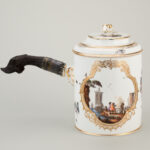
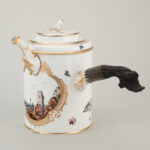
An estimated 60% of the world’s current food supply originated with seeds from the Americas. Many Indigenous communities have used cacao in their food and drink for thousands of years, from Ancestral Puebloans who lived in the present-day southwestern United States to Andean empires once in what is today’s Peru. Cacao beans first arrived in Europe on ships, like those painted on this German chocolate pot, after the Spanish invasion of present-day Mexico in the 16th century. Following European colonization and the export of beans, a new sweetened and spiced beverage—hot chocolate—became popular among wealthy Europeans who could afford the imported ingredients and the porcelain to drink it in. It was so popular that in 1753, Swedish scientist Carl Linnaeus (1707–1778) renamed the cacao tree in European scientific textbooks Theobroma cacao: “food of the gods.”
Manufacturer
Meissen Porcelain Factory
1709–2000
German, founded 1710
Meet Meissen Porcelain Factory


 On View at the BMA