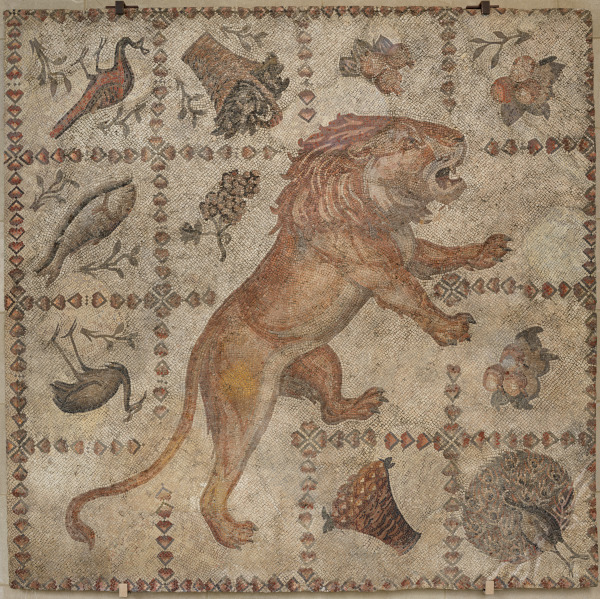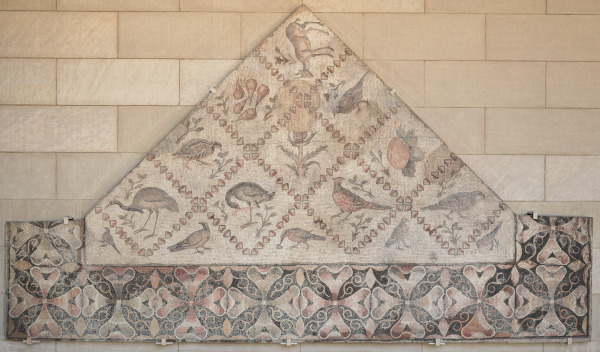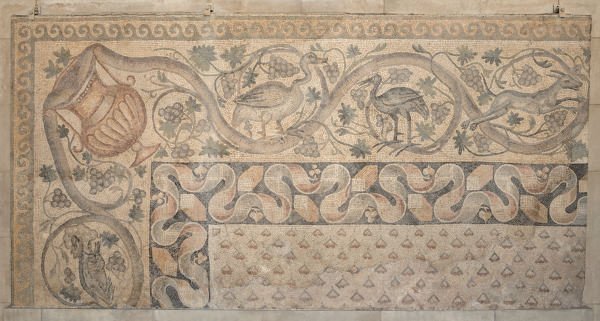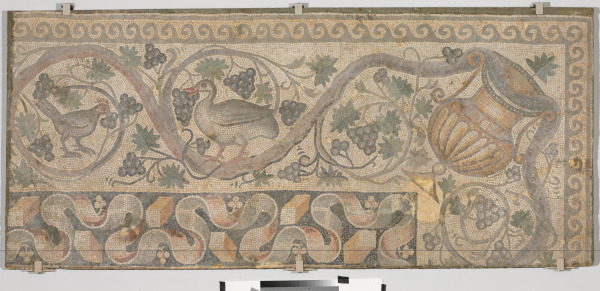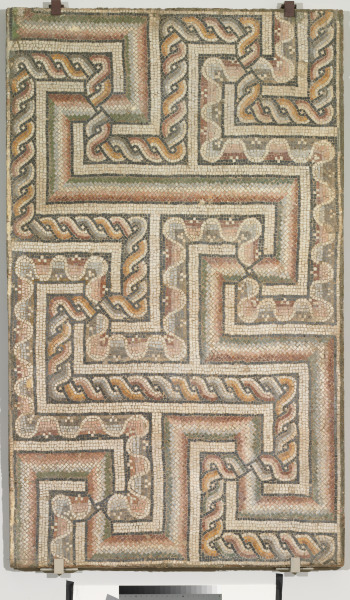





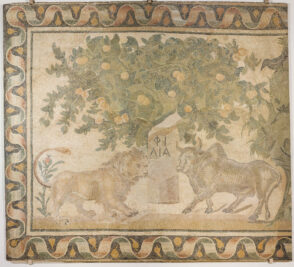
Fragment of floor mosaic depicting a lion and a humped ox
401-500
Physical Qualities
Stone, lime mortar, 89 x 100 in. (226.1 x 254.1 cm.)
Credit Line
Antioch Subscription Fund
Object Number
1937.119
The Greek word philia (friendship) on the tree’s trunk refers to an abstract concept that, by the 5th century, signified an expansive range of social relationships ranging from the familial to the political. The pairing of predator and prey in relaxed postures connects the idea of philia to a peaceable society, and scholars have connected the motif both to Greco-Roman ideas of a golden age and to Christian descriptions of paradise. The pavement fragment is one of four in the BMA’s collection which comes from the hall of an
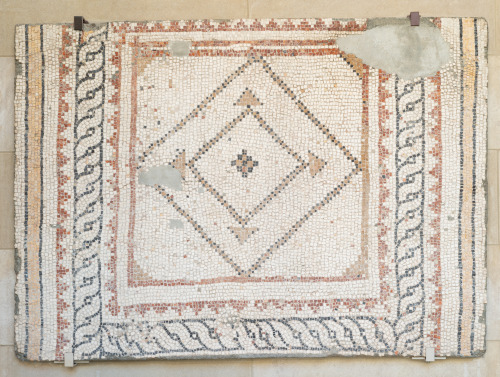
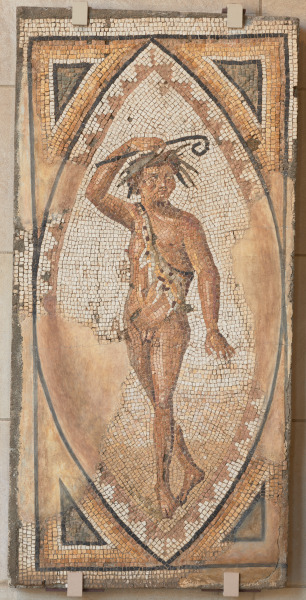
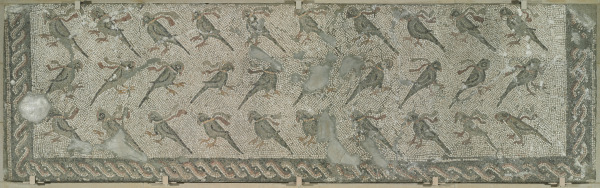
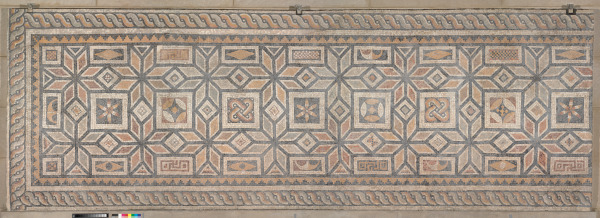
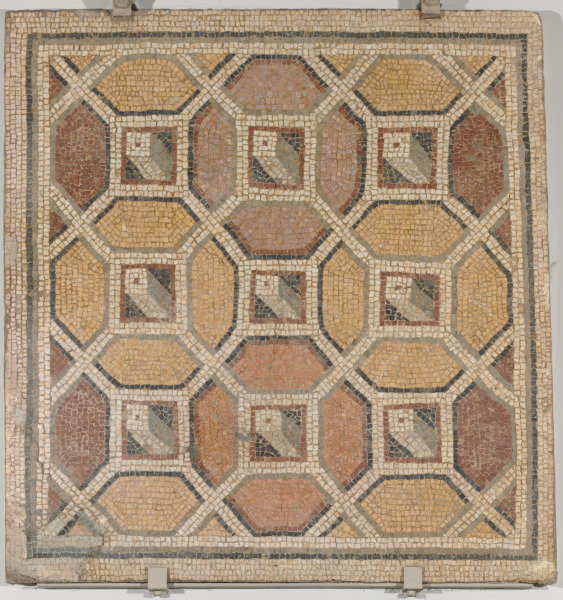
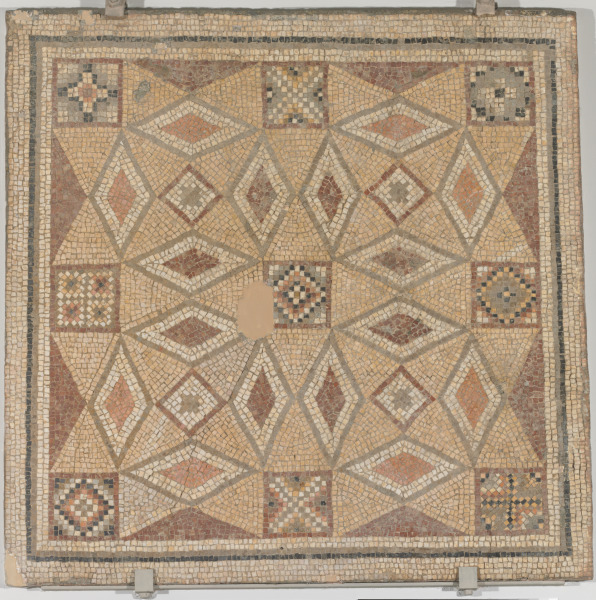
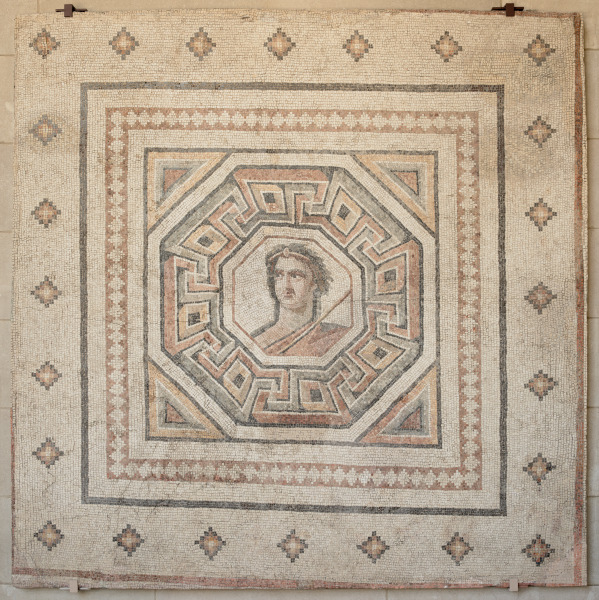
unidentified and only partly excavated building in Daphne. Look for others in the stairwell next to the Cone Wing.
The Baltimore Museum of Art and Walters Art Gallery, "Early Christian and Byzantine Art", 1947, no. 666-a, pl. LXXXII.
"Antioch-on-the Orontes, II, The Excavations, 1932-1936," Princeton: Princeton University Press, 1938, no. 44, p. 182, pl. 31.
C.R. Morey, "The Mosaics of Antioch," Longmans, Green & Co., 1938, p. 42, pl. XXIII.
Doro Levi, "Antioch Mosaic Pavements," Princeton: Princeton University Press, 1947, vol. I, 317, vol. II, pl. LXXII-a.
Museum Quarterly II, BMA, 1937-1938
R. Stead, "Pavements from a Fabled City," "Pharos," Museum of Fine Arts, St. Petersburg, Florida, Fall/Winter 1964, pp. 5-8.
K.R. Greenfield, "The Museum: Its First Half Century," "Annual I," BMA, 1966, ill. p. 28.
 On View at the BMA