


Unidentified
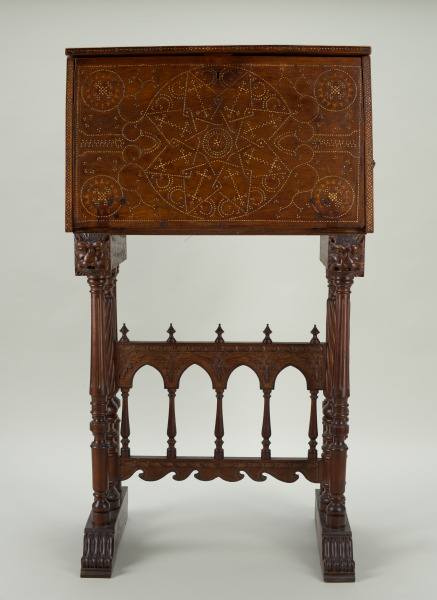
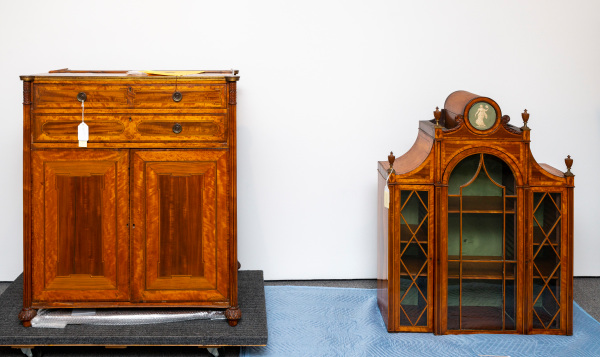
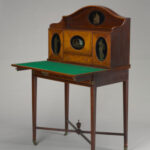
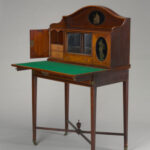
Lady’s Writing Desk
1799-1809
Physical Qualities
Mahogany, mahogany veneer, satinwood inlay; tulip poplar and red cedar secondary woods; paint, glass, brass, 50 15/16 x 30 3/4 x 18 3/4 in. (129.4 x 78.1 x 47.6 cm.)
Credit Line
Gift of Maria Groome Tracy, Jamesville, New York
Object Number
2000.378
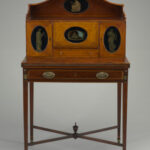
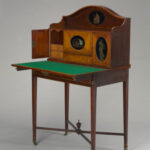
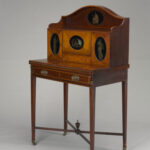
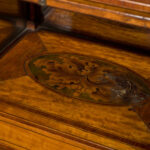
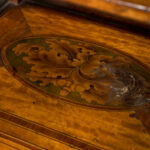
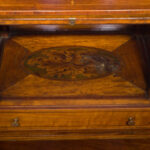
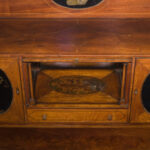
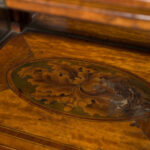
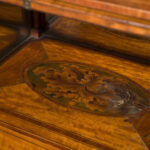
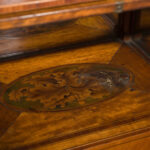
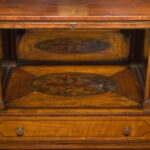
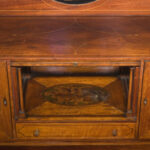
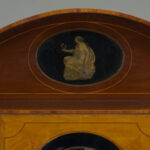
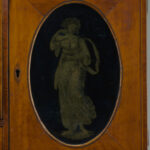
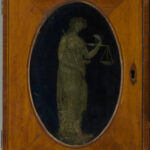
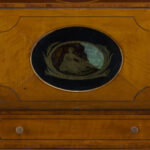
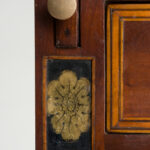
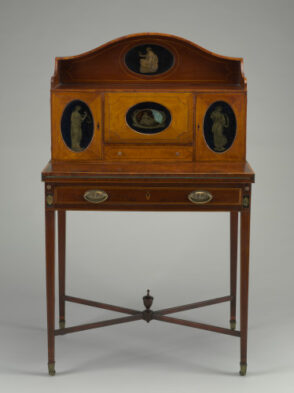
Light and elegant, this writing desk represents the finest Federal-era Baltimore furniture. The form, inspired by English tastemaking furniture designers George Hepplewhite (c. 1727-1786) and Thomas Sheraton (1751-1806), is enriched with delicate inlay and oval reverse-glass painted panels. Like Rebecca James’s New England Still Life hanging nearby, the blue and gold glass panels in the desk were painted backwards – details first, then the main figures, then the background. Graceful if cautionary images of “Temperance” and “Justice” flank a compartment fitted with cubby holes and drawers where a woman of fashion might have hidden her personal correspondence. The compartment is masked by a drop-down inlaid panel that supports another reverse-glass painted panel. Here, Diana, goddess of the hunt, cradles the recumbent form of Endymion, whom the gods granted eternal sleep to preserve his youth and beauty.
The Baltimore Museum of Art by gift, 2000; Miss Maria Groome Tracy, Fayetteville, New York; Miss Ethel Knight (great-niece of below) by descent; Martha Ringgold Rose (daughter of below) by descent; Samuel Ringgold (1770-1845) of Pleasant Hill, MD
The Baltimore Museum of Art, "Baltimore Furniture 1760-1810", Baltimore, MD, February 21, 1947-April 6, 1947
The Baltimore Museum of Art, "New on View", June 19-October 6, 2002
The Baltimore Museum of Art, "New on View", June 19-October 6, 2002
J. Abbot, In the Spotlight, 'BMA Today,' July/August 2001, p. 8
Miller, Edgar G., Jr., American Antique Furniture, a Book for Amateurs. Baltimore: The Lord Baltimore Press, 1937. repro. p. 453
Baltimore Museum of Art. The Baltimore Museum of Art: Celebrating a Museum. Baltimore: The Baltimore Museum of Art, 2014.
Benskin, Elizabeth, and Suzy Wolffe. Teacher's Guide to the American Collection. Baltimore, MD: Baltimore Museum of Art, 2014, pages 31 and 38.
Maker
Unidentified
2000-01-01 00:00:00–2000-01-01 00:00:00
Explore the Collection Further