




Henri Matisse and Henri Matisse, Presentation Maquette, Poésies de Stéphane Mallarmé
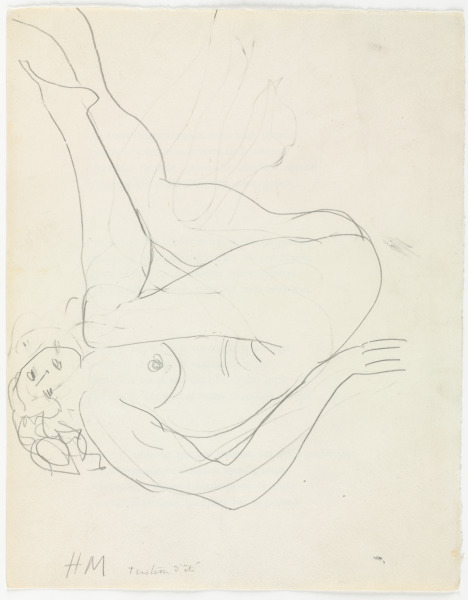
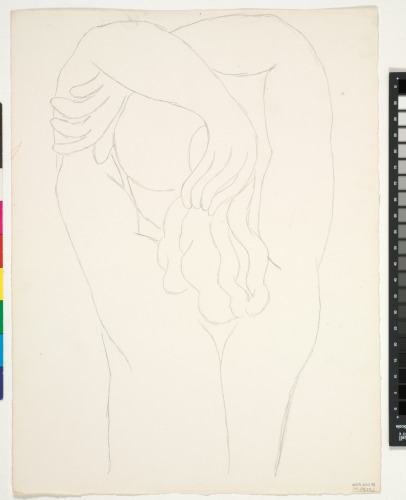
Studies for “Tristesse d’été” (refused etching)
20th century
Scroll

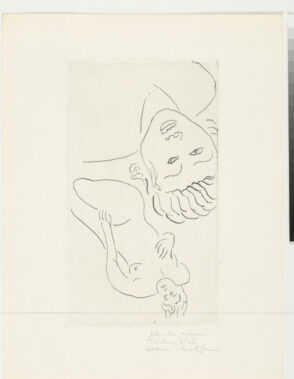
Studies for “Tristesse d’été” (refused etching)
20th century
Physical Qualities
Etching, Sheet: 330 x 250 mm. (13 x 9 13/16 in.)
Credit Line
The Cone Collection, formed by Dr. Claribel Cone and Miss Etta Cone of Baltimore, Maryland
Object Number
1950.12.694.5
Here, Matisse plays with the details of the reclining figure’s pose. He shows her from two different vantage points and varies the wavy hair described in the poem as a “tepid river.” Rather than having the figure flow diagonally down the page, in the finished version at right, Matisse adopts a sleeping figure reclining on her side to capture the languid atmosphere of the poem.
Katy Rothkopf and Leslie Cozzi, The Baltimore Museum of Art, "A Modern Influence: Henry Matisse, Etta Cone, and Baltimore," October 3, 2021 - January 2, 2022.
Guillaud, Maurice, and Jacqueline Guillaud. Matisse: le rythme et la ligne. Paris: Guillaud Editions, 1987, plate no. 603 (published as “Tristesse d'été I”).
Cozzi, Leslie and Katherine Rothkopf (eds). "A Modern Influence: Henri Matisse, Etta Cone, and Baltimore." Baltimore: The Baltimore Museum of Art, 2021. ill.
Inscribed: lower right in pencil: "planche refusée / Tristesse d'été / Henri Matisse"
Markings: chopmark: MALLARME ET MATISSE no WM