





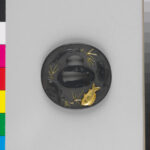
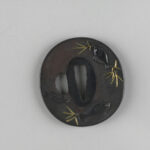

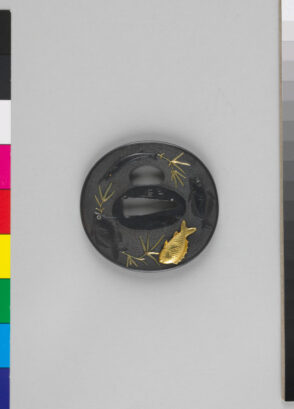
Sword Guard (tsuba) Decorated with Seven Fish
1767-1799
Physical Qualities
Silver-copper alloy with gold decoration, 6 7/8 x 6 5/8 x 1/4 in. (17.5 x 16.8 x 0.6 cm.)
Credit Line
Gift of Leroy Lipman
Object Number
1955.166.37
Seven fish, each one unique, are realistically portrayed in high
relief against a ground descriptively named fish-roe (namako).
The gold fish is a sea bream (tai), the long one a half-beak
(sayori). The sea bream, prized for its red flesh, is often
served on celebratory occasions. A halibut or flounder (karei)
is among the fish on the opposite side.
Seven is a lucky number in Japan. On the seventh day of the
new year, rice porridge seasoned with seven herbs is served
to protect against evil and bring good luck and longevity.
The Star Festival, celebrated on the seventh day of the seventh
month, is the most popular day to be married. The samurai
code (bushido) contains seven basic principles generally
understood to be righteousness, courage, benevolence,
politeness, honesty, honor, and loyalty.
The Baltimore Museum of Art by gift, 1955; Leroy Lipman, Baltimore
Frances Klapthor, BMA, "The Poetic Imagery of Japanese Art," February 22-August 8, 2010. (Levy Rotation)
Inscribed: Signed, "Masanori (of Musashi)"