February 3, 2026
BMA Brings Modern Icon Henri Matisse into Conversation with Celebrated Contemporary Artist Louis Fratino
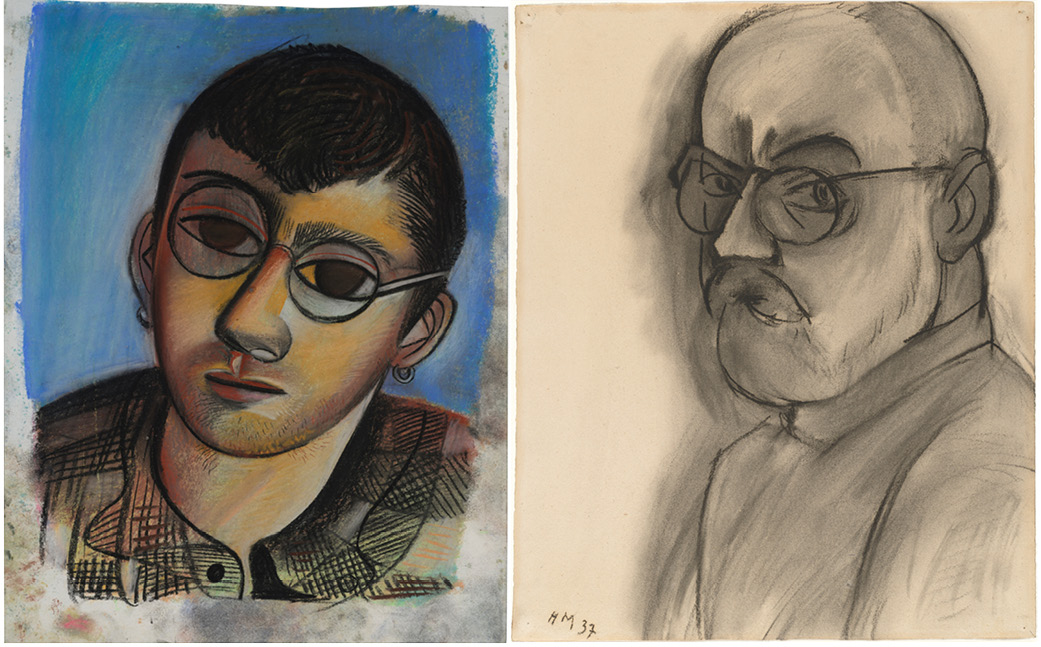
Fratino and Matisse: To See This Light Again is part of a trio of Matisse exhibitions opening at the BMA in March 2026
BALTIMORE, MD (February 3, 2026)—This March, the Baltimore Museum of Art (BMA) will explore the enduring influence of Henri Matisse through a compelling exhibition that juxtaposes the modern icon’s work with that of celebrated contemporary artist and Maryland native Louis Fratino. Fratino and Matisse: To See This Light Again will feature approximately 15 works by each artist presented in dynamic pairings and groups, revealing a unique intergenerational dialogue. The exhibition includes iconic paintings and intimately scaled drawings and sketchbooks with figure studies, interiors, still lifes, and self-portraits. Among the works are two new paintings by Fratino—September flowers and Studio nude—as well as several other works by the artist that have not been previously exhibited. Fratino and Matisse will be on view March 11–September 6, 2026, and is part of a suite of Matisse exhibitions opening at the BMA in the same month, including Matisse and Martinique: Portraits and Poetry and Matisse in Vence: The Stations of the Cross.
Fratino’s practice is grounded in both his contemporary lived experience and a deep engagement with the aesthetic traditions of European and American modernists. His paintings and works on paper depict warm domestic spaces and intimate portraits that often illuminate queer love, desire, and beauty. Fratino was born in Annapolis, Maryland and educated at the Maryland Institute College of Art (MICA). While at MICA, he began spending considerable time with the BMA’s extensive holdings of Matisse works, drawn in particular to the French artist’s mastery of line, color, and atmosphere—elements that significantly inform his own vision and practice. Matisse’s portrayals of idealized and abstracted female nudes also provided fertile space for exploration, as Fratino turned his focus to the male form, expanding the artistic gaze to the male body and positioning himself within a long history of artists engaged with the nude.
In discussing Matisse as a source of inspiration, Fratino says, “It’s the idea that art manifests a kind of attention or a vision for your life, that it can be a beautiful life despite certain circumstances that may be happening around you. In Matisse’s case, he lived through the First and Second World Wars. Painting can confirm that life is beautiful and that it’s worth looking at. I do feel that it gives back to me that way: I see my surroundings and my garden or the people I’m around differently because I’ve had the opportunity to paint them. That’s a feeling I get from Matisse. By keeping one eye on art history and one eye on life, I leave room for myself to enter the conversation.”
Fratino and Matisse: To See This Light Again is loosely organized around core themes of portraiture, scenes of domesticity, and the still life. Fratino selected each of the featured Matisse works, focusing especially on those produced in Nice, France, during a period when Matisse emphasized light-filled interiors and depictions of languorous female models. Matisse first visited Nice at the end of 1917 and found the light and atmosphere especially inspiring, stating, “When I realized that every morning I would see this light again, I could not describe my joy.” Finding joy in everyday moments has also provided an essential anchor for Fratino, and the forthcoming exhibition enhances understanding of his practice by placing his still lifes and interior scenes on equal footing with the portraits of male figures for which he is most readily recognized.
Among the captivating pairings in the presentation is Matisse’s canonical Large Reclining Nude (1935) and Fratino’s small portrait Tom (2019). A celebration of line, color, and pattern, the elongated figure in Matisse’s Nude is flattened into a hypnotizing play of positive and negative space, with the form of her exaggerated proportions creating a perfectly balanced work. In Tom, Fratino utilizes a similarly tight composition to capture his subject’s form in a winding Mobius strip–like path of line and volume. Draped in a blue checkered shirt that riffs on the Nude’s background, Tom strikes the same seductive pose, but the bowl and spoon in front of him reveal what is actually a domestic, affectionate moment. Among the pairings are also Matisse’s 1913 lithograph Seated Nude, Viewed from Behind and Fratino’s new, evocative painting Studio nude; and Fratino’s richly painted Large Roses (2022-2023) and Matisse’s Still Life, Bouquet of Dahlias and White Book (1923), and two self-portraits connecting the artists across time.
“Fratino and Matisse is an exciting opportunity to see how artistic dialogue can move across generations, places, and lived experience,” said Asma Naeem, the BMA’s Dorothy Wagner Wallis Director. “This exhibition is an invitation: to explore two phenomenal artists through a new lens, to witness how art connects with and reflects daily life, and to consider how art remains continually open to reinvention. It is especially meaningful to present this work while advancing new scholarship on Matisse and it’s a joy to celebrate an artist with deep ties to our community. I look forward to seeing our many visitors in the exhibition.”
The exhibition is co-curated by Virginia Anderson, Senior Curator of American Art and Department Head, American Painting & Sculpture and Decorative Arts, and Katy Rothkopf, the Anne and Ben Cone Memorial Director of the Ruth R. Marder Center for Matisse Studies and Senior Curator of European Painting and Sculpture.
This exhibition is supported by Nancy Dorman and Stanley Mazaroff and Steve Pulimood.
About Louis Fratino
Louis Fratino (b. 1993, Annapolis, MD) received his BFA in Painting with concentration in Illustration from the Maryland Institute College of Art in Baltimore (2015). He is a recipient of a Fulbright Research Fellowship in Painting, Berlin (2015-16) and a Yale Norfolk Painting Fellowship in 2014. His first institutional solo exhibition, Louis Fratino: Satura, was presented at Centro Pecci in Prato (2025). In 2024, Fratino’s paintings were featured in the 60th International Art Exhibition of the Venice Biennale, Stranieri Ovunque—Foreigners Everywhere, curated by Adriano Pedrosa. Fratino’s work is included in the collections of the BMA, Hammer Museum, Museum of Contemporary Art San Diego, Museum of Fine Arts, Houston, RISD Museum, and Whitney Museum of American Art. He lives and works in Brooklyn, New York.
Matisse at the BMA
The BMA is home to the world’s largest public collection of works by Matisse, with more than 1,600 paintings, drawings, prints, and illustrated books. Its renowned holdings were first established in the early 20th century with a gift of 600 works from Baltimore sisters Claribel and Etta Cone. Since then, the BMA has more than doubled the size of the collection, including gifts from the Matisse family. The BMA has organized many acclaimed exhibitions on the artist and dedicated the Ruth R. Marder Center for Matisse Studies in 2021 to improve access to and advance scholarship of his work. Fratino and Matisse opens this March alongside Matisse and Martinique: Portraits and Poetry and Matisse in Vence: The Stations of the Cross. This suite of exhibitions draws on the museum’s collection, as well as loans from public and private collections to create a series of exceptional experiences for visitors.
About the Baltimore Museum of Art
Founded in 1914, the Baltimore Museum of Art (BMA) inspires people of all ages and backgrounds through exhibitions, programs, and collections that tell an expansive story of art—challenging long-held narratives and embracing new voices. Our outstanding collection of more than 97,000 objects spans many eras and cultures and includes the world’s largest public holding of works by Henri Matisse; one of the nation’s finest collections of prints, drawings, and photographs; and a rapidly growing number of works by contemporary artists of diverse backgrounds. The museum is also distinguished by a neoclassical building designed by American architect John Russell Pope and two beautifully landscaped gardens featuring an array of modern and contemporary sculpture. The BMA is located three miles north of the Inner Harbor, adjacent to the main campus of Johns Hopkins University, and has a community branch at Lexington Market. General admission is free so that everyone can enjoy the power of art.
Press Contacts
For media in Baltimore:
Anne Brown
Baltimore Museum of Art
Senior Director of Communications
abrown@artbma.org
410-274-9907
Sarah Pedroni
Baltimore Museum of Art
Communications Manager
spedroni@artbma.org
410-428-4668
Alina Sumajin
PAVE Communications
alina@paveconsult.com
646-369-2050